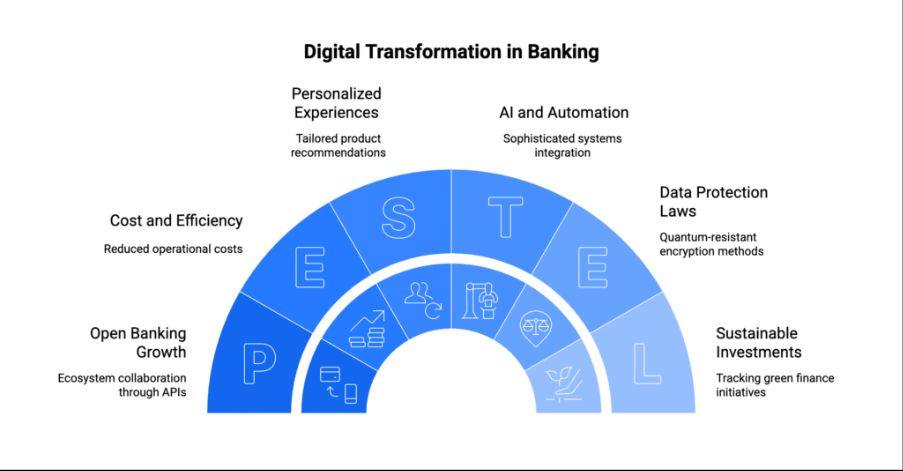
1. The Rise of Fintech: Challengers and Innovators
Financial technology companies have disrupted traditional banking by:
- Providing mobile-first banking solutions
- Offering low-cost cross-border transfers
- Delivering personalized financial services using AI and data analytics
Case Examples:
- Stripe and PayPal redefine online payments
- Revolut, N26, and Chime offer global digital-first banking
- Ant Group uses AI and big data to enhance credit accessibility
Leadership Insight:
Innovation in finance is driven by agility, data intelligence, and customer-centric design.
2. AI and Machine Learning in Financial Services
AI is revolutionizing multiple aspects of banking:
- Fraud detection: AI algorithms analyze transactional patterns to prevent fraud in real-time
- Credit scoring: Alternative data and AI models provide accurate assessments for unbanked populations
- Algorithmic trading: Machine learning optimizes investment portfolios and risk management
Strategic Implication:
Financial institutions that integrate AI effectively gain operational efficiency, risk mitigation, and competitive advantage.
3. Blockchain and the Decentralization of Money
Blockchain technology introduces trustless, transparent, and decentralized financial systems:
- Cryptocurrencies: Bitcoin, Ethereum, and stablecoins redefine digital value transfer
- Smart contracts: Automate agreements, reducing intermediaries
- Decentralized Finance (DeFi): Creates accessible financial services outside traditional banks
Leadership Insight:
Banks and fintech must adapt to decentralization while ensuring regulatory compliance and systemic stability.
4. Mobile Banking and the Consumer Revolution
Consumers increasingly demand instant, accessible, and personalized financial services:
- Mobile wallets, contactless payments, and P2P transfers are standard expectations
- Data-driven insights enable personalized offers and financial literacy tools
- Consumer trust hinges on security, convenience, and transparency
Strategic Insight:
Digital-first approaches redefine customer engagement, loyalty, and retention in banking.
5. Cloud Computing and Banking Infrastructure
Cloud adoption is transforming financial institutions by:
- Enabling scalable, resilient IT infrastructure
- Supporting real-time analytics and decision-making
- Reducing operational costs while enhancing innovation speed
Case Examples:
- JPMorgan Chase and Goldman Sachs leverage cloud for AI-driven analytics
- Banks use hybrid cloud for regulatory compliance and secure data management
Leadership Insight:
Digital infrastructure is no longer optional—it is the backbone of modern banking.
6. Cybersecurity and Risk Management
Digital finance introduces new vulnerabilities:
- Increased risk of cyberattacks and data breaches
- Complex regulatory compliance requirements across jurisdictions
- Operational risk from automated systems
Leadership Approach:
- Invest in advanced threat detection systems
- Train personnel on cyber hygiene
- Integrate cybersecurity into strategic planning
Insight:
Trust in finance is anchored in security; leaders must treat it as a strategic priority.
7. The Role of Regulation in Digital Finance
Regulatory frameworks shape the adoption and growth of digital finance:
- Open Banking regulations encourage data sharing while maintaining consumer privacy
- Central Bank Digital Currencies (CBDCs) aim to modernize money systems
- Anti-money laundering (AML) and Know Your Customer (KYC) laws safeguard financial integrity
Leadership Insight:
Successful financial leaders navigate innovation within regulatory boundaries, balancing compliance with agility.
8. Digital Transformation in Corporate Banking
Corporate banking is also evolving:
- AI-driven risk assessment for loans and investments
- Blockchain-enabled trade finance for faster settlement
- Cloud-based platforms for real-time liquidity and portfolio management
Strategic Insight:
Corporate banking benefits from digital transformation through efficiency, transparency, and competitive differentiation.
9. Global Financial Inclusion
Digital finance drives financial inclusion, giving access to unbanked and underbanked populations:
- Mobile banking reaches rural areas previously without banking access
- Microloans and AI-driven credit assessment provide opportunities for small businesses
- Digital identity verification improves trust and accessibility
Leadership Insight:
Financial inclusion is both a social imperative and a strategic growth opportunity.
10. Strategic Roadmap for Financial Leaders
To succeed in the digital era, financial leaders must:
- Embrace customer-centric innovation
- Integrate AI, blockchain, and cloud technologies strategically
- Invest in cybersecurity, risk management, and regulatory compliance
- Foster talent capable of operating at the intersection of finance and technology
- Drive financial inclusion while ensuring profitability
Leadership Insight:
Digital transformation is not a project—it is a cultural and strategic evolution.
Conclusion: The Future of Money is Digital, Intelligent, and Inclusive
Digital transformation in finance is more than technology adoption—it is a strategic reinvention of banking, investment, and payments. The winners will be organizations that balance innovation, ethics, regulatory compliance, and customer trust.